
General & How-To's
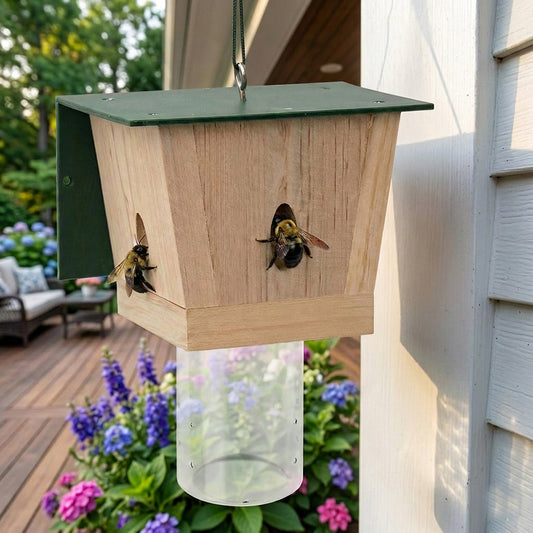
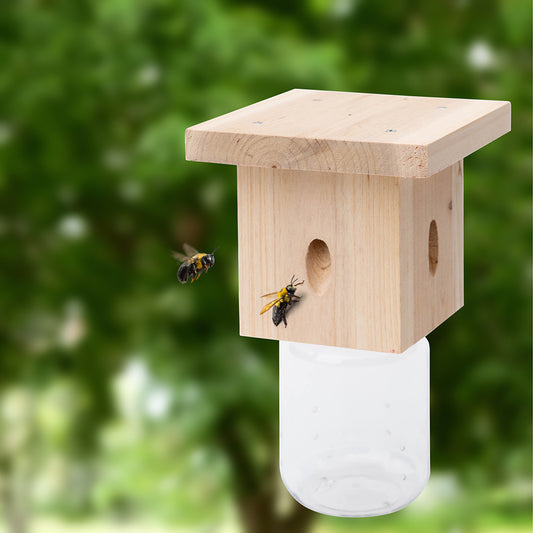
Our traps are ingeniously designed to use a carpenter bee's own natural instincts against it. The unfinished wood and precisely-sized entrance hole mimic an ideal nesting spot. Curious carpenter bees enter to investigate. Once inside, they are drawn to the light from the collection jar below and become trapped. It’s a powerful, 100% poison-free method.
Placement is everything for a high catch rate. Focus on hanging traps on the sunny sides of your house (south or west facing). The best spots are high up on the corners of eaves, peaks of the roofline, and on or near deck railings. If you see existing bee holes, place a trap nearby to catch emerging bees.
The key is to be proactive. Put your traps out in early spring as soon as the weather warms (around 50-60°F or 10-15°C). This is when bees emerge from hibernation looking for mates and new homes. By setting your traps early, you catch them before they start drilling. Leave them up all season long until the first frost.
Once the collection jar is about half-full, simply unscrew it. To ensure all bees have expired, you can leave the sealed jar in direct sunlight for a day or fill it with a bit of soapy water. Then, empty the contents, rinse the jar, and re-attach it. It's a clean and simple process.
Once the collection jar is about half-full, simply unscrew it. To ensure all bees have expired, you can leave the sealed jar in direct sunlight for a day or fill it with a bit of soapy water. Then, empty the contents, rinse the jar, and re-attach it. It's a clean and simple process.
Troubleshooting & Optimization
Don't worry, this is a common question. Here’s a checklist: Give It Time: It can take up to two weeks for local bees to find and trust a new trap. Location, Location, Location: Is it in a sunny spot, high up on a corner? If not, try moving it. The sunny side of the house is almost always best. Seal Old Nests: This is a crucial step! If bees have their old "homes" available, they won't look for new ones.
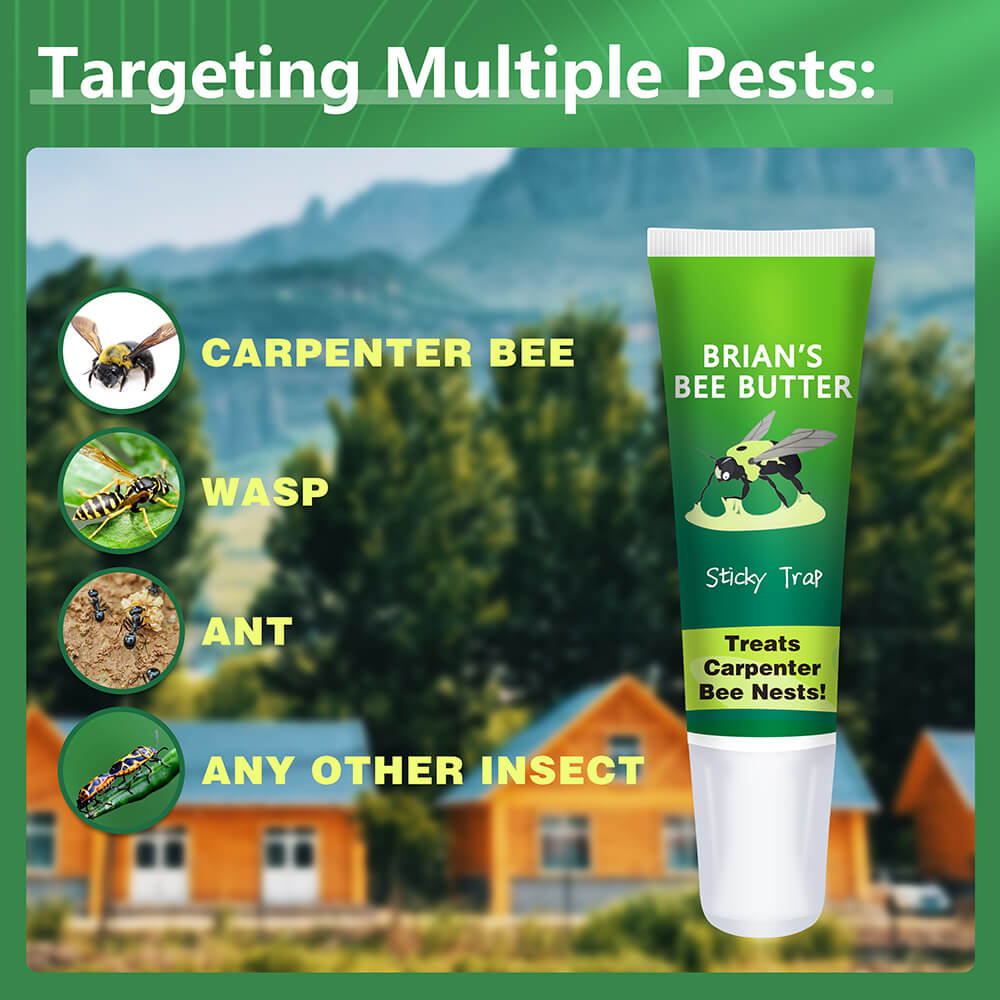
Our traps are designed to work perfectly without any bait. However, if you're in a highly competitive area or want to speed up the process, you can use a lure. A small dab of a sweet substance or our specialized Brian's Bee Butter can help attract bees to the trap entrance faster.
For effective coverage, we recommend a "perimeter defense." Place one trap for every 15-20 feet of area you need to protect. For a typical home, starting with 2 to 4 traps to cover the main corners and a deck is a very strong start. A larger property with sheds or barns will benefit from additional traps.
Product & Safety
Absolutely not. Because our traps use no pesticides, poisons, or chemicals, they are completely safe to have around your family and pets. The design targets only carpenter bees, posing no threat to other animals.
This is an excellent question. Our traps are specifically designed to be safe for beneficial insects. The entrance hole size and wood-boring nature of the trap are attractive only to carpenter bees. Honeybees and bumblebees have different nesting behaviors and will not be drawn to the trap, allowing them to continue their important work of pollination in your garden.
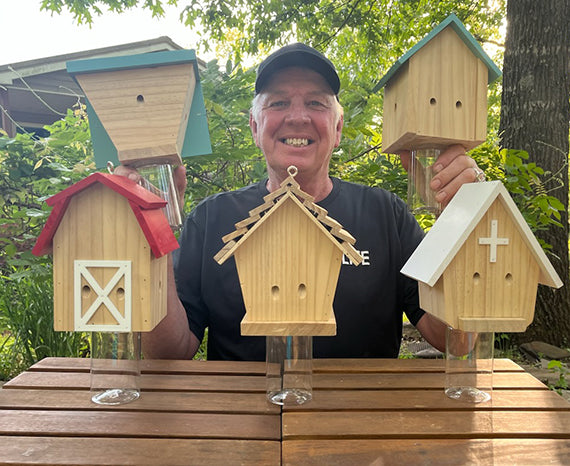
Our traps are constructed from high-quality, unfinished pine or cedar wood for maximum durability and natural appeal to the bees. They are built to withstand outdoor elements for multiple seasons. To extend the life of your trap, store it in a dry place like a garage during the winter.